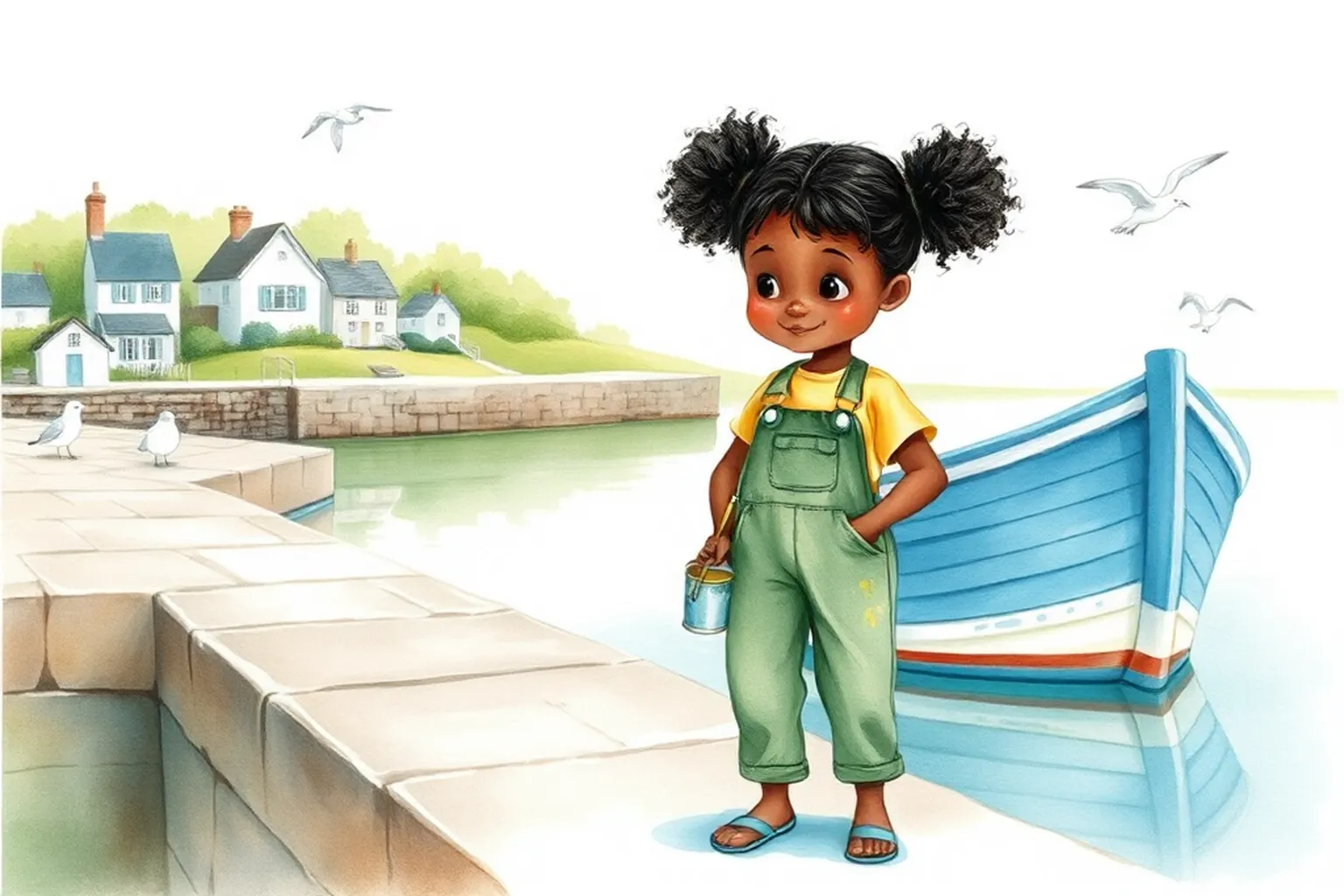
The Boat That Waited for a Name
Ama's aunt has mended an old fishing boat and asked Ama to choose its name and paint it on. But the whole harbour town has an opinion, and every name Ama tries seems to leave someone out.
By nine or ten, a lot of children would like a story that does not talk down to them. This is the section for that: stories of around a thousand words, which is seven or eight minutes read aloud, or a comfortable stretch of quiet reading for someone who prefers to go alone.
The language is not held back. Sentences run longer, descriptions take their time, and a story might use 'abandoned' or 'compass' without stopping to explain. Where a word is likely to be new, it is marked and can be looked up without losing your place.
Plots can hold more than one thing at once: a secret that changes how an earlier scene looks, a friendship that goes wrong and has to be mended, a quest where the first plan fails. Stories here can be stranger or a little darker than the younger sections, but they still end well, and the dark parts are never allowed to last.
Ama's aunt has mended an old fishing boat and asked Ama to choose its name and paint it on. But the whole harbour town has an opinion, and every name Ama tries seems to leave someone out.

Every child on Mars makes the Walk at ten, alone, to a great stone outside the settlement. Oyin has turned back at the door three times. Then a dust storm strands the settlement's weather robot, and everyone else is busy.
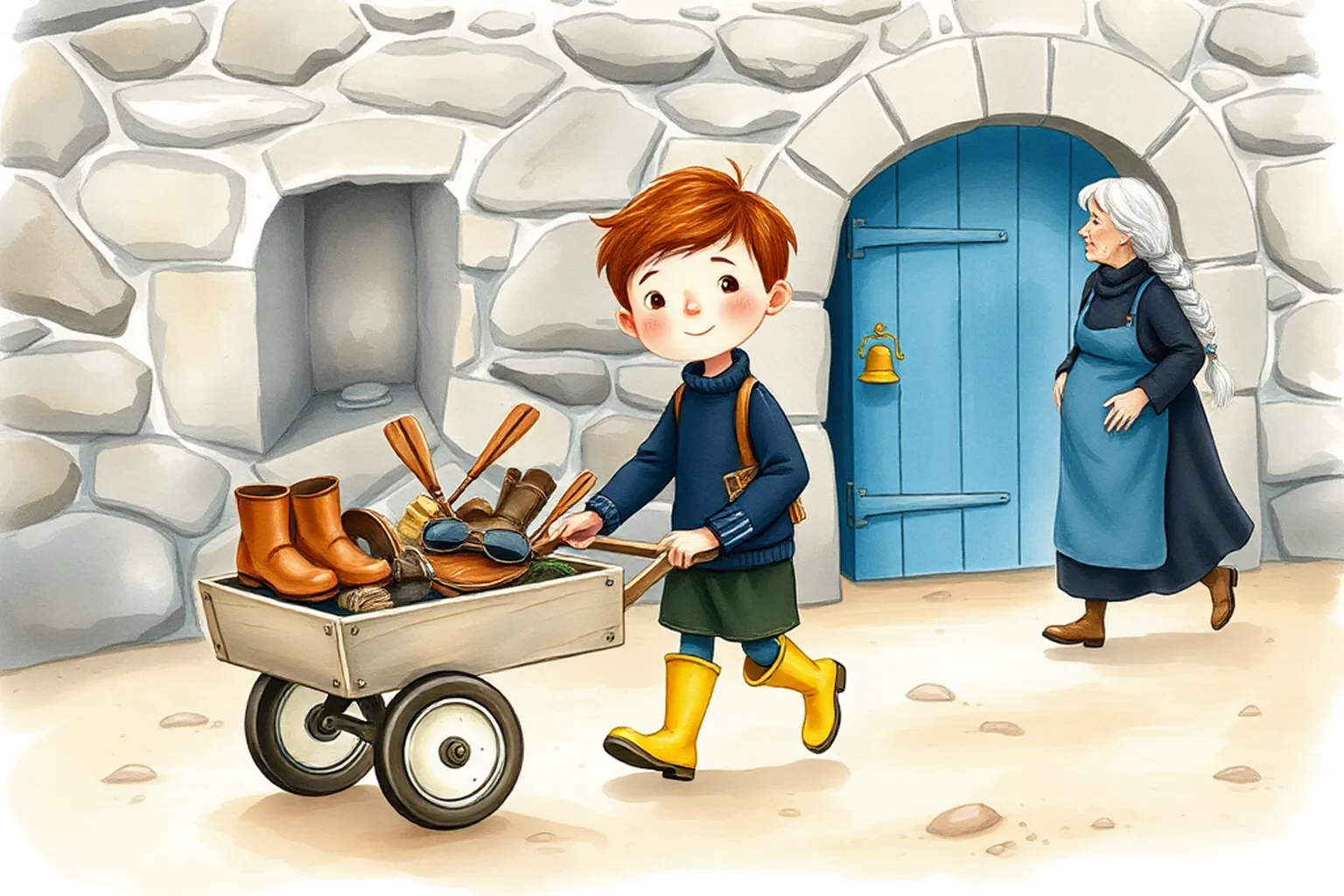
Every summer Jago helps his great-aunt in a harbour office where a magic ledger names the owner of whatever the sea washes up. When he finds a small red boot at the back of the shelves, he uncovers a secret, and a rule that only clever thinking can get around.