The Walk to Marker Nine

On Mars, everybody does the Walk when they turn ten. Nobody makes you. You put on a suit, you clip your line to the guide cable, and you walk alone to Marker Nine, which is a stone the size of a sofa, nine hundred metres from the settlement door. You scratch your initials on it and you walk back. Then everyone has cake, or what we call cake.
I turned ten in the spring. By the middle of summer I had tried the Walk three times. Each time I got as far as the inner door of the , and each time I told Mr Castellano that my suit felt funny. He checked it very carefully. There was never anything wrong with it, and he never said so. He just made a note and said, "Another day, then, Oyin," as if we were talking about the weather.
Which brings me to Drizzle. Drizzle is our weather robot, a squat thing on six wheels, about the size of a large dog, with a wind on its head that has been bent since before I was born. Somebody named it Drizzle as a joke, because none of us children have ever seen any. Every morning it around the markers and reports on the settlement speakers in a flat, polite voice. "Clear and cold. No change." People say good morning back. It cannot hear them. They do it anyway.
In the second week of summer a dust storm came through. It was not dangerous, because the domes are built for far worse, but it lasted nine days and it left a red coat on everything, including the . On the first clear morning every grown-up in the settlement went up on the roof with a brush. And at breakfast, the voice on the speakers had changed. "Clear. And. Cold," said Drizzle, very slowly. "Battery. Low. Panel. Covered."
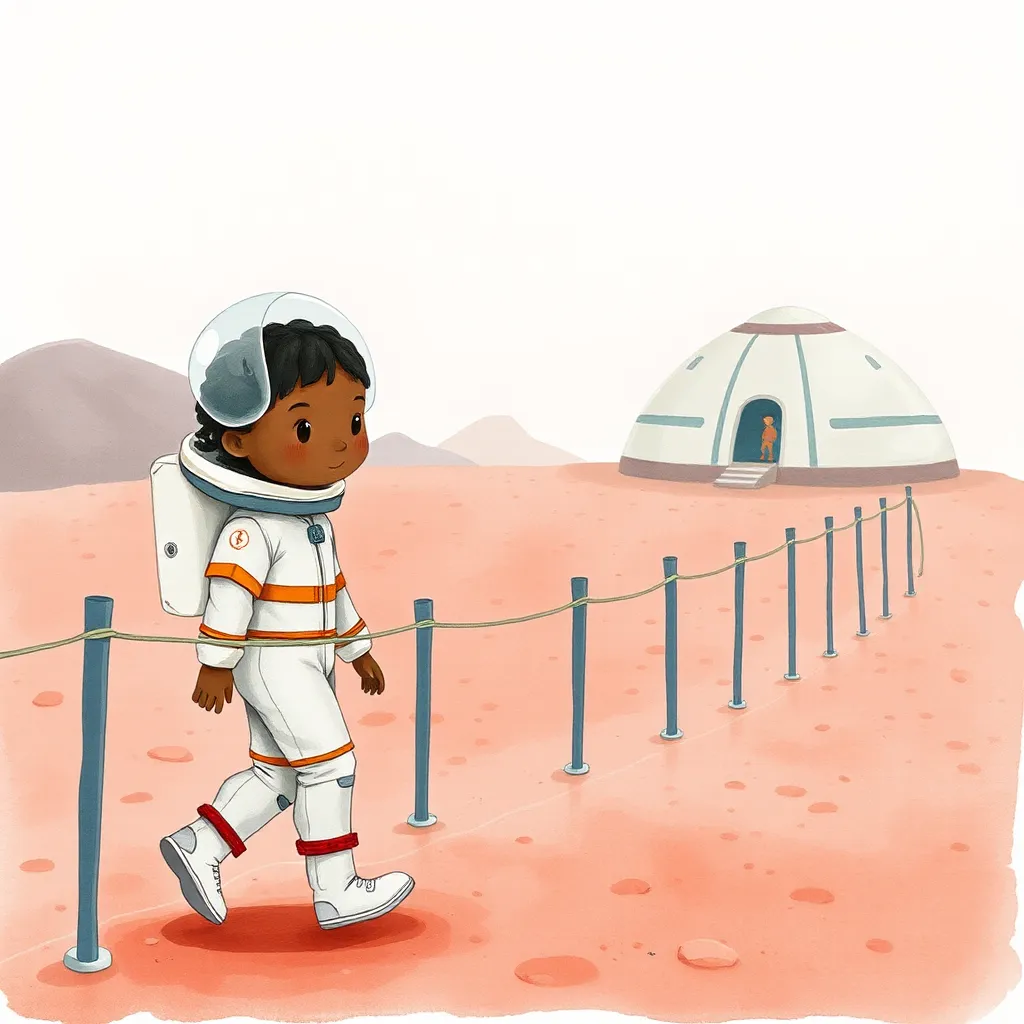
It had stopped beside Marker Nine. All it needed was someone to wipe the dust off its little panel, which would take about ten seconds. But the grown-ups would be on the roof until dark, and by dark Drizzle's battery would be flat. A battery that goes flat in that cold has to be replaced, and replacements come from Earth, and Earth is two years away by post.
I stood under the speaker for some time. Then I went to the suit room, where Mr Castellano was looking for a bigger brush. "My suit's fine," I said. It came out too loud. He looked at me. "It was always fine," I said. "I know," he said. He checked my seals anyway, every one. At the inner door he said, "I'll be on the radio. Your father will be at the west window. The cable goes all the way, so you can't get lost. All you can do is turn round, and that's allowed."
People think I must have been afraid of something out there. I wasn't, exactly. Nothing lives out there. That was the trouble. Inside the settlement there is always a fan running, and boots overhead, and somebody arguing about the soup. When the outer door slid open there was no sound at all except my own breathing, and the ground just went on, red and stony, under a sky with no lid. All my life I had had a lid.
I clipped on. I felt the click in my glove instead of hearing it. I took a step, and then, because nothing had happened, another. Walking in a suit is like walking in someone else's sleeping bag. There is a marker post every hundred metres with a number on it. At Marker Three my legs went strange, and I stopped and looked at my boots. "You've stopped," said Mr Castellano in my ear. "I know." "That's allowed too." Nobody said anything for a while. And then, on the open channel, that slow flat voice said, "Clear. And. Cold." It is hard to explain, but I laughed. It is difficult to be terrified of a place when someone is giving you the weather. I went on. Four. Five. Six.

Drizzle sat beside the great stone under a coat of dust as thick as a blanket. I knelt down and wiped its panel with my glove, back and forth, until the dark glass shone. For a moment nothing happened. Then a small green light came on. "Good afternoon," said Drizzle, a little quicker. "Panel clear. Clear and cold." "No change," I said.
Then I looked at the stone. I had never thought about how many names there would be. Initials covered it from the ground to as high as an arm could reach: every child who had ever done the Walk, and the grown-ups too, from the early days. Low down on one side I found S.C., and beside it, scratched very small, four short lines. "Mr Castellano," I said, "who is S.C.?" The radio was quiet for a moment. "Silvio Castellano," he said. "I was thirty-one." "What are the four lines?" "Those are the four times I got to the inner door and told them my suit felt funny."
I did not say anything. I took the little steel that hangs on every suit, and I scratched O.A., and next to it, very carefully, three short lines.
I should have started back then, but the light had begun to change. We have all seen the sunset through the west window, which twenty years of dust have scratched to the colour of dishwater, so nobody had told me. Nobody ever tells you. The sun went down small and white behind the far rim, and all around it that rusty sky turned blue. Just there, and just for a few minutes: a soft, cold, clear blue, the only blue on the whole planet. My mother grew up under a sky that colour, all day, every day. She says she never looked up much. I stood there until Mr Castellano said, quite gently, "Time to come in, Oyin." And then, "Good, isn't it?"
We had cake, or what we call cake. My father held on to me for rather longer than was necessary, and I let him. And the next morning, when I came in to breakfast, the speakers crackled and the flat, polite voice said, "Clear and cold. No change." Which just shows how much a weather robot knows.
Words to know
- airlock
- A small room with two doors, which lets people go between the air inside a building or ship and the outside.
- vane
- A flat blade on a pole that turns to show which way the wind is blowing.
- trundles
- Moves along slowly on wheels.
- solar panels
- Flat sheets that turn sunlight into electricity.
- scribe
- A pointed metal tool for scratching marks onto hard things.
Quiz
More stories like this
The Village That Winked
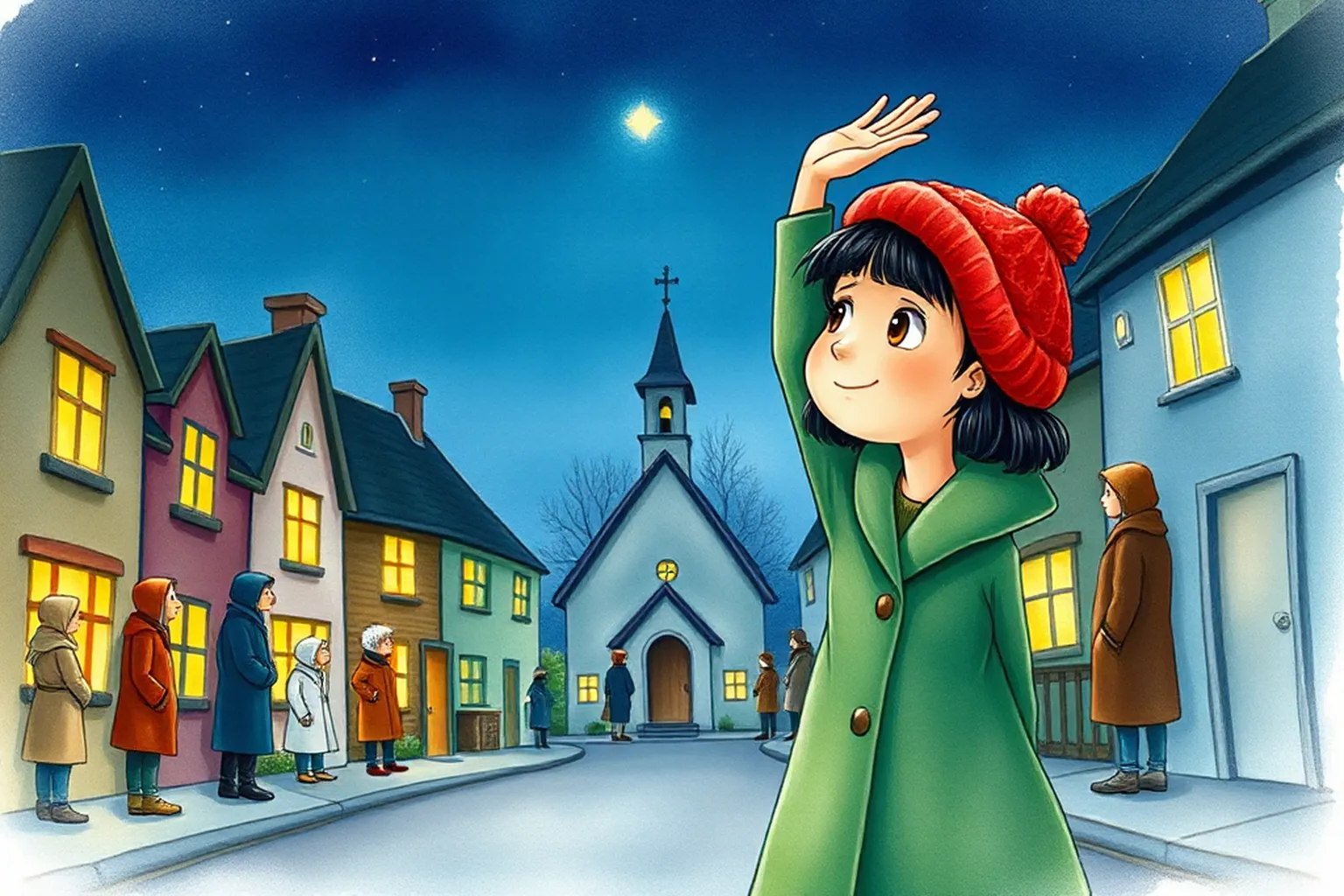
Hana's mum works on a space station, and Hana waves whenever it crosses the sky. Then she learns that Mum cannot see her wave, only the village lights, as small as a crumb. So Hana has an idea, and she will need every light switch in the village.
The Torch That Took a Rest
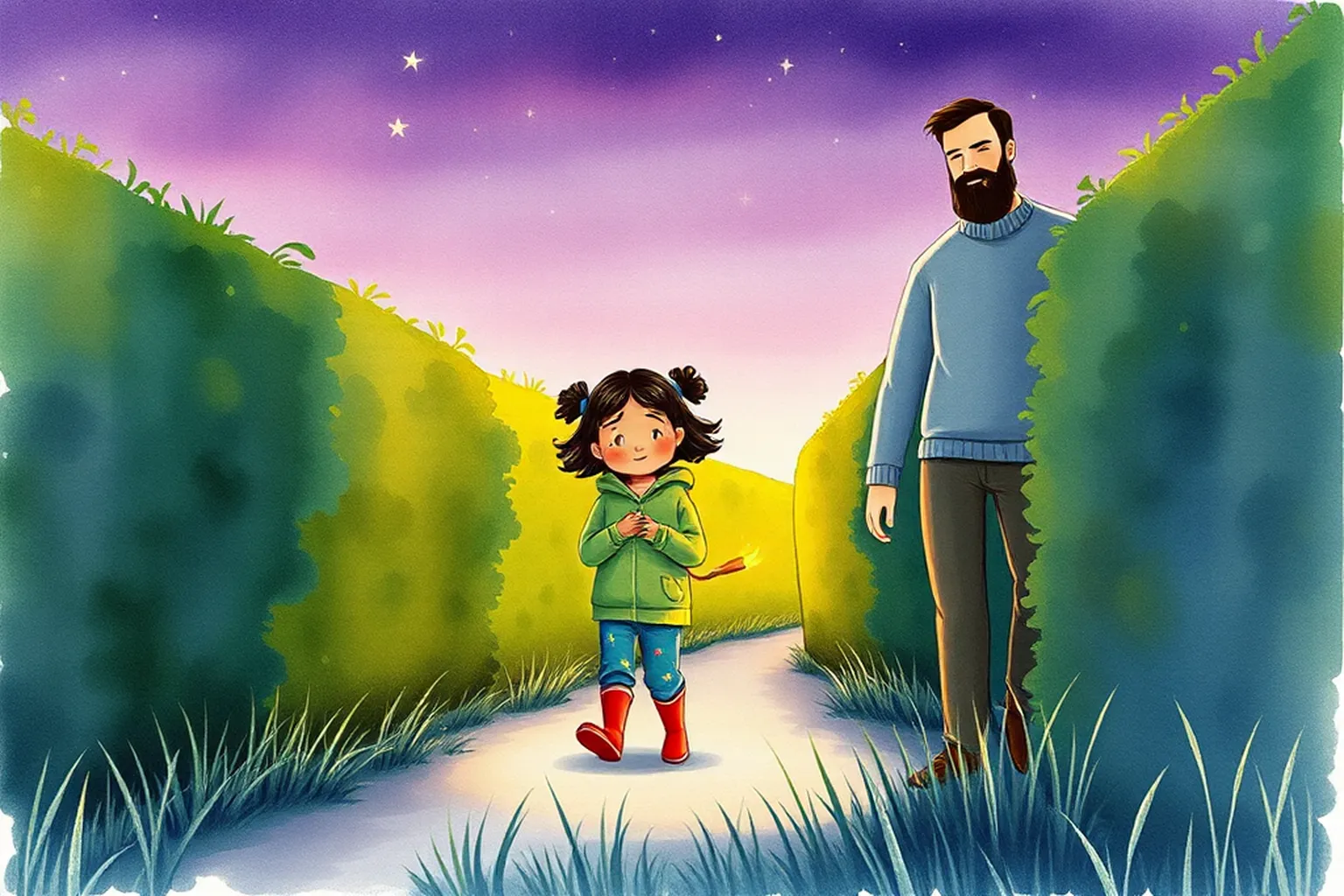
On the last night of a camping holiday, Esme wants to see a glow-worm in the long grass of Hollow Lane. But the glow-worms will not shine while her torch is on, and Esme does not want to be in the dark.
The Clock That Went Quiet
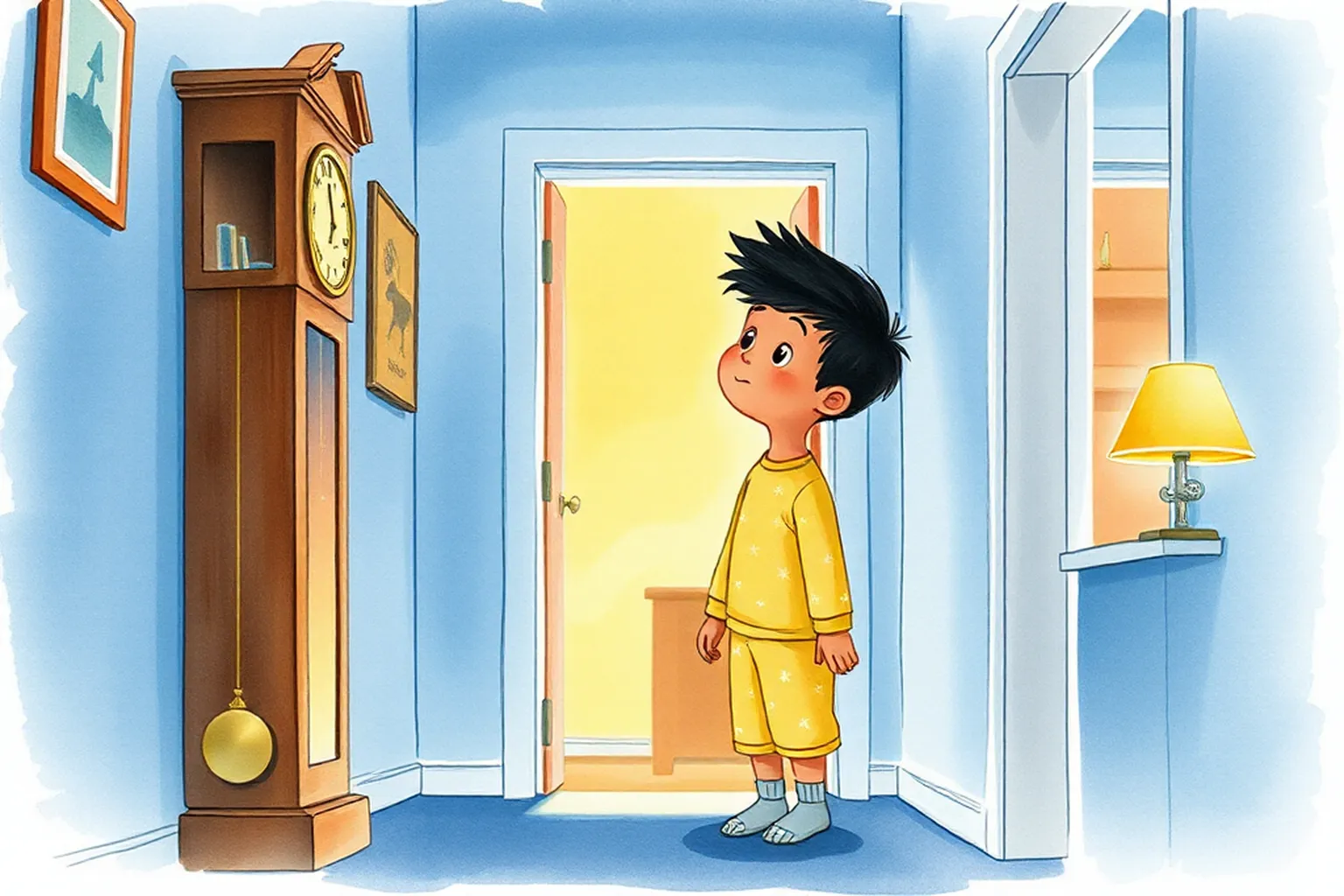
Ravi always falls asleep to the tick of Barnaby, the tall old clock in Grandad's hall. Tonight Barnaby has gone quiet, the little brass key is missing, and Ravi decides to find out who took it.
Salt and the Old Bell
Salt is a small grey cat who keeps a lighthouse and has a secret: she does not like the dark. When a soft fog hides the way home for her friend, an old mouse in a tiny boat, she must step outside at night, one paw at a time.