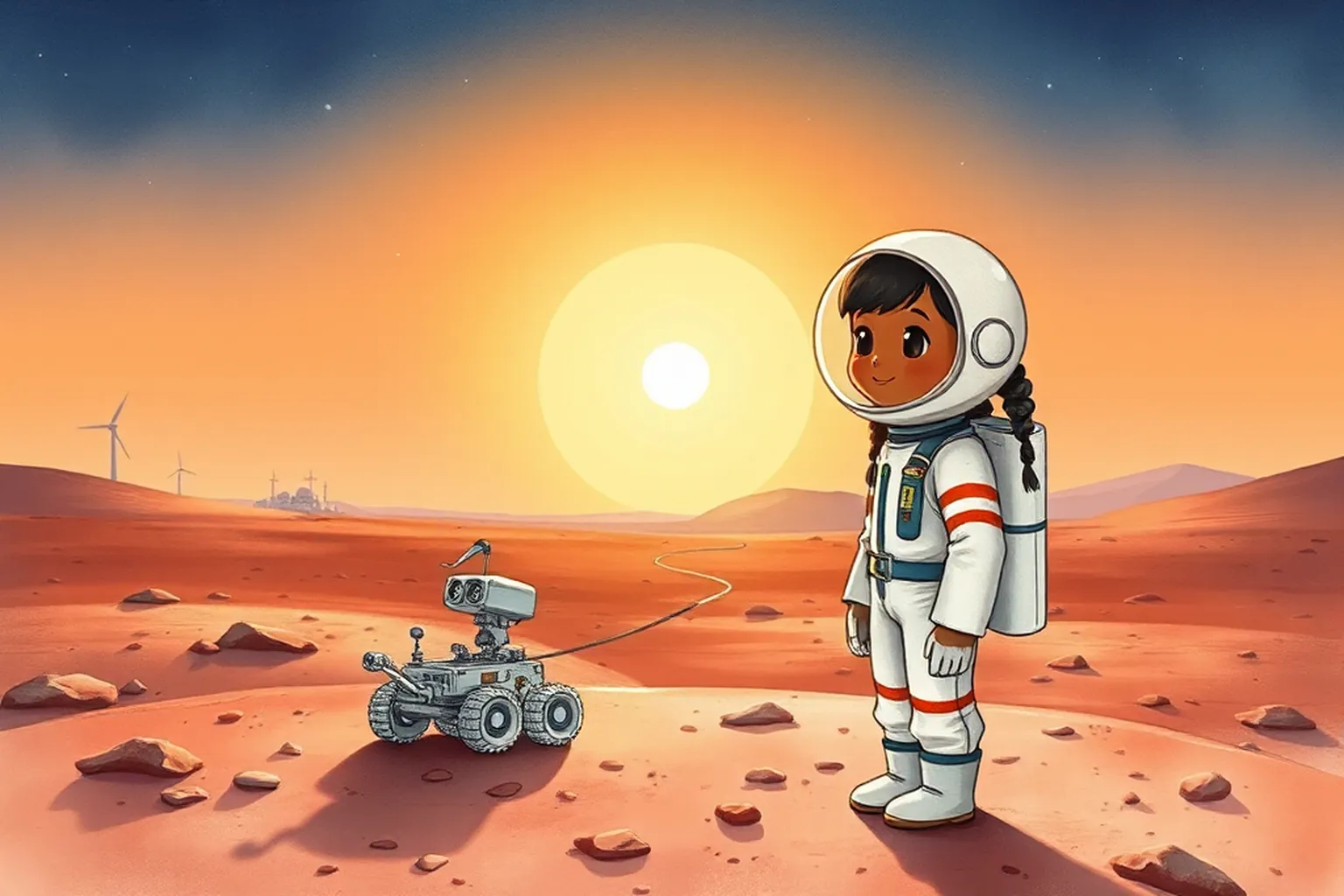
The Walk to Marker Nine
Every child on Mars makes the Walk at ten, alone, to a great stone outside the settlement. Oyin has turned back at the door three times. Then a dust storm strands the settlement's weather robot, and everyone else is busy.
Space stories start from a simple fact: the sky is enormous, and children notice. In this section you might meet a rocket that needs a repair, a moon with odd weather, a small robot on a very quiet planet, or a visitor from far away who is just as curious about us as we are about them.
The science is kept light. Real things such as the Moon, the planets and the long dark between them turn up as scenery, and the stories are mostly about whoever is standing in front of it: who is brave enough to go outside, who misses home, who forgot to pack a helmet.
Younger children tend to like the rockets and the moon, while older ones start asking what is really out there and who will be the first to see it. The stories have a place for both.
A space story can be a good one for the evening, with the curtains left open. These stay calm about the dark and the distances, and each one ends somewhere safe, whether that is a ship, a planet or a bed.
Every child on Mars makes the Walk at ten, alone, to a great stone outside the settlement. Oyin has turned back at the door three times. Then a dust storm strands the settlement's weather robot, and everyone else is busy.
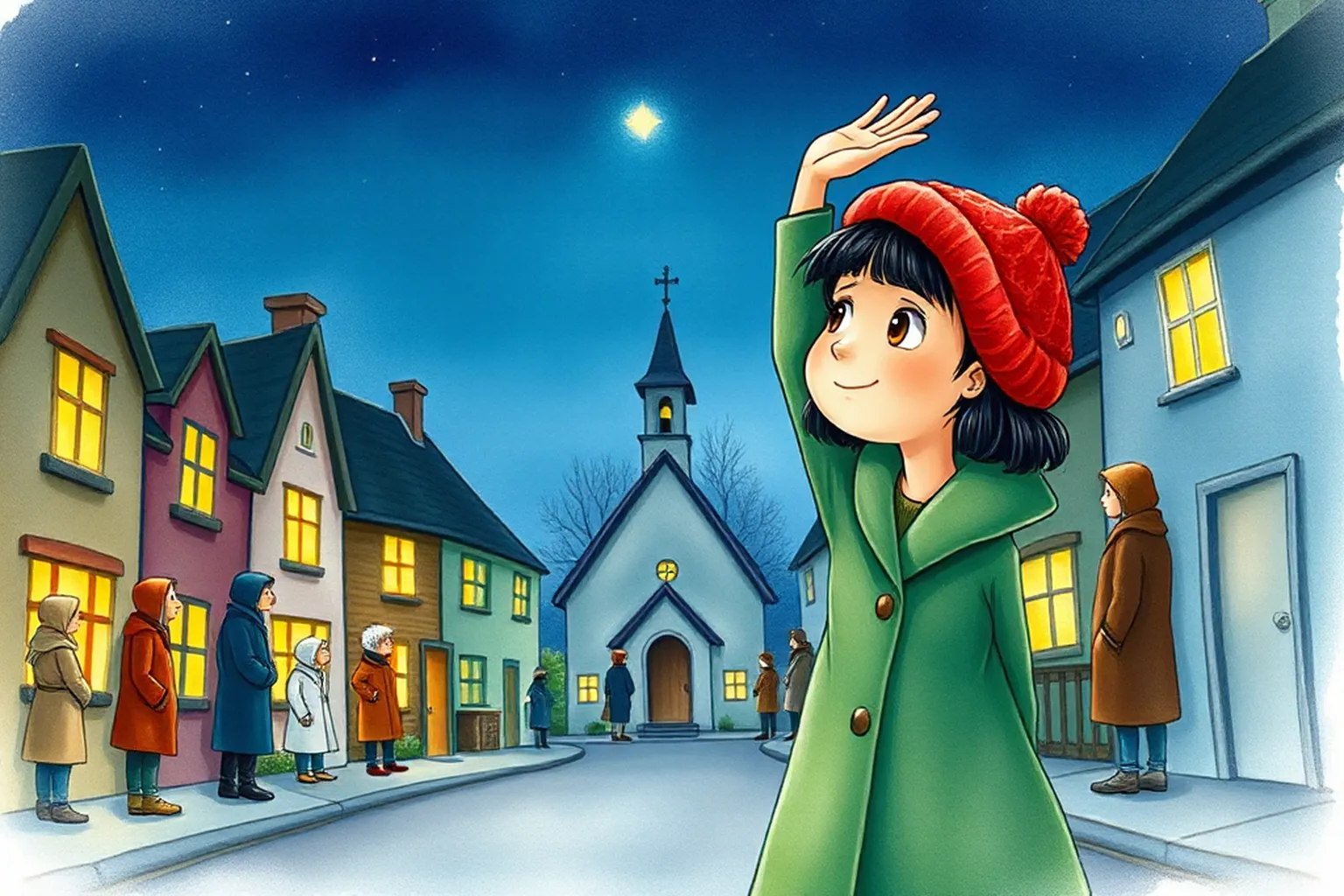
Hana's mum works on a space station, and Hana waves whenever it crosses the sky. Then she learns that Mum cannot see her wave, only the village lights, as small as a crumb. So Hana has an idea, and she will need every light switch in the village.