The Boat That Waited for a Name
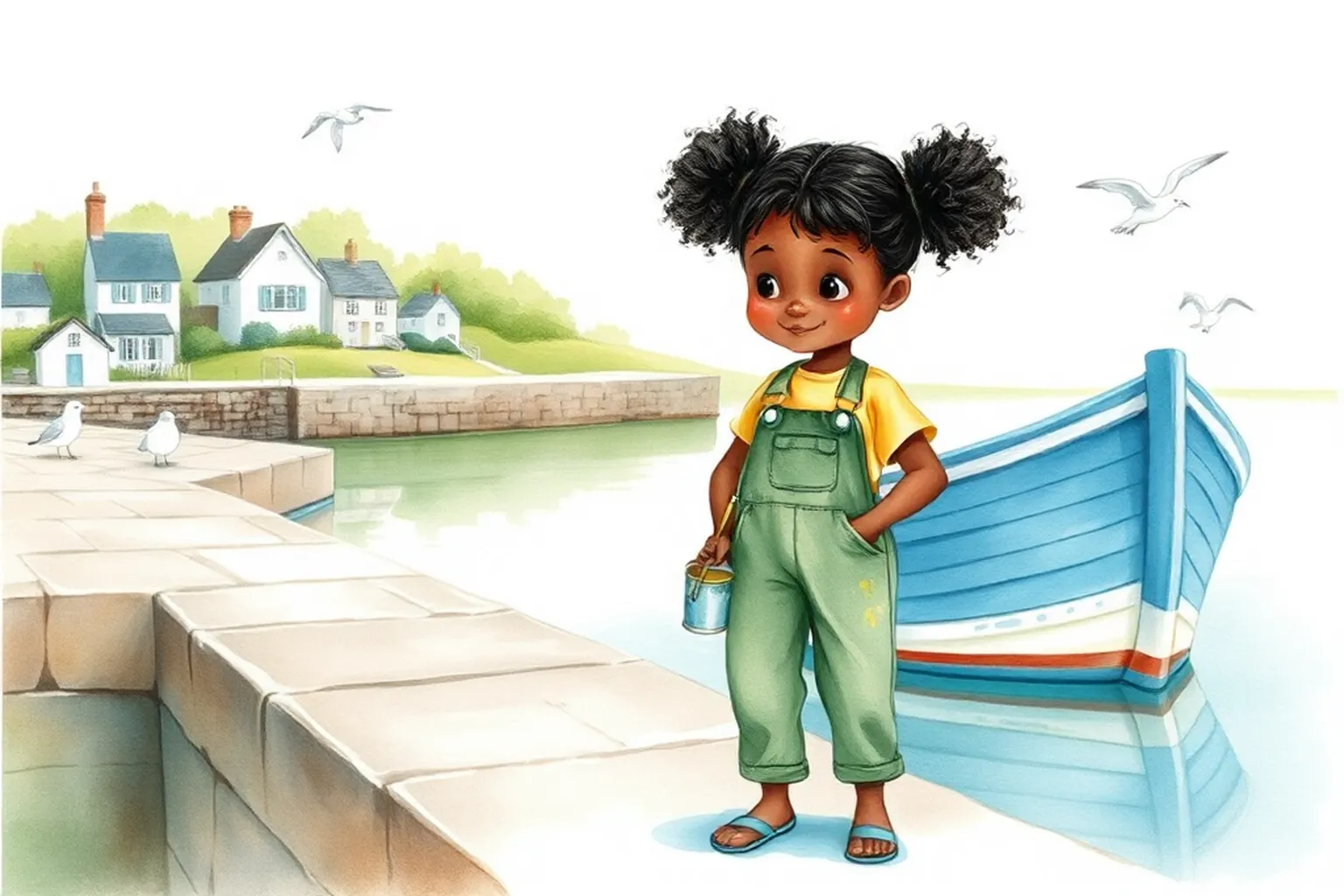
Aunt Kes had spent the whole spring mending the old boat. She had pulled it out from under a at the back of her boatyard, where it had sat for six years among nettles and lobster pots, ever since old Bram stopped fishing. She had fitted three new planks, sanded every inch, and painted it the blue of a clear morning sky. Now it rested on the above the calm green water of Fennick harbour, smelling of fresh paint and warm wood. Only one thing was missing.
"She needs a name," said Aunt Kes, handing Ama a tin of white paint and a fine brush. "And you're going to choose it. You've got the steadiest hand in the family." Ama was ten, and nobody had ever asked her to name anything bigger than a goldfish. She held the brush as if it were made of glass. "Any name I like?" asked Ama. "Any name you like," said Aunt Kes. "She goes in the water on Saturday."
Ama walked home along the , trying out names in her head. Seaglass. Bluebell. The Gull. They all sounded nice, and none of them sounded right. She had only reached the bakery when Mr Pellow leaned out of the door, dusted with flour from his eyebrows to his elbows. "Is it true?" he asked. "Are you naming Bram's old boat?" News travelled fast in Fennick. It travelled faster than the boats did.
"Call her Golden Loaf," said Mr Pellow. By the fish stall, Mrs Gorran the said, ". A boat should have a strong name." Miss Mensah, who taught the oldest class at school, said Kittiwake, after the little grey and white gulls on the cliffs. And the Lowen twins, Jory and Wenna, who were seven, came skipping out of the sweet shop and shouted "THUNDERBOLT!" at the same moment. By the time Ama got home, she had four names and no answer. Down at the boatyard, the boat waited.
On Monday she tried choosing one. She liked Kittiwake best, so she painted it on a scrap of driftwood and propped it against the boat. It looked lovely. Then Mr Pellow came by with some buns for Aunt Kes and saw it. "Ah," he said. "Kittiwake. That's a fine name." He smiled, but it was the sort of smile a bun has when it has not quite risen, and he walked away a little more slowly than he had come. Ama turned the driftwood round to face the wall.
On Tuesday she tried choosing all of them. She unrolled a long strip of old wallpaper and painted GOLDEN LOAF STEADFAST KITTIWAKE THUNDERBOLT along it in her neatest letters. When she and Aunt Kes held it up beside the boat, it went past the front, past the back, and halfway across the boatyard. The twins, peering through the gate, laughed until they had to sit down, and Ama laughed too. "We're going to need a longer boat," said Aunt Kes. Every name Ama picked left somebody out. Every name she did not pick left somebody out too. And the boat waited.
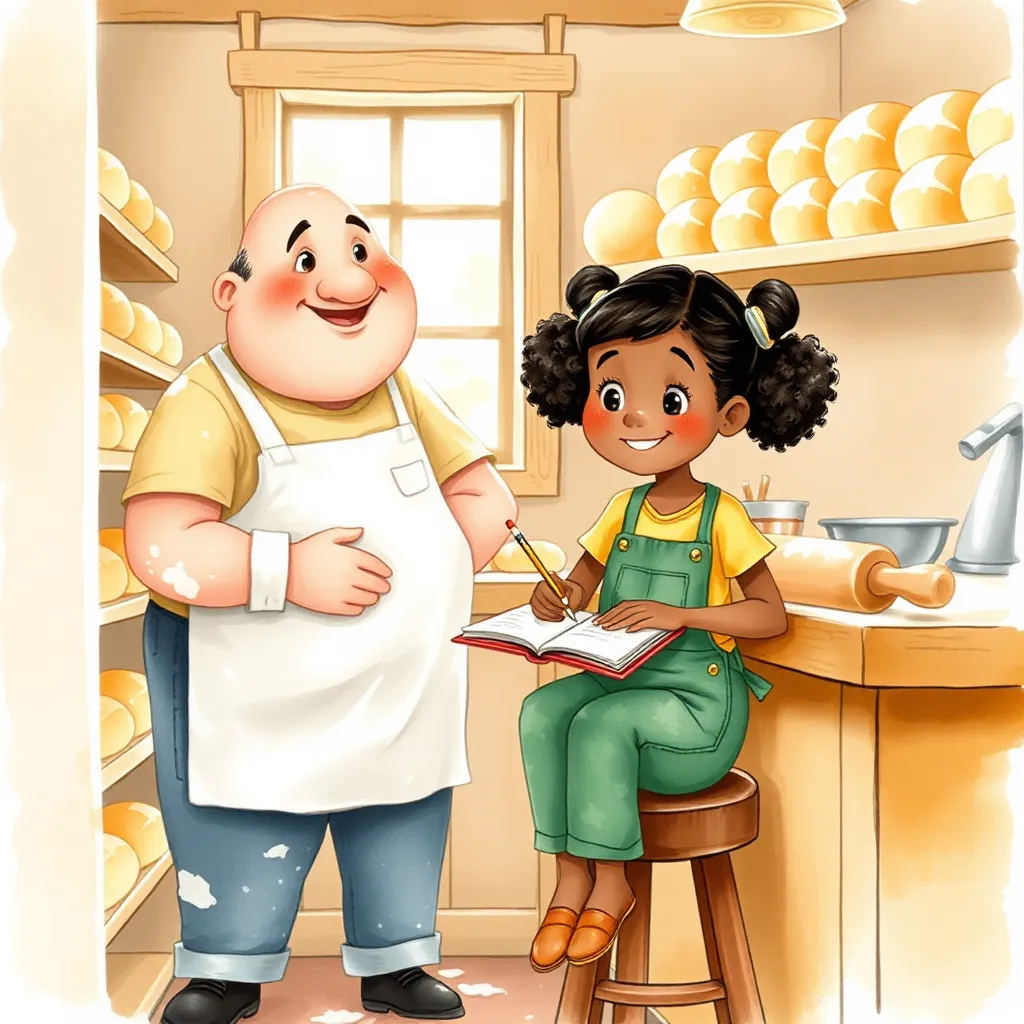
On Wednesday, Ama tried something different. She took a notebook round the town, but this time she did not ask what the boat should be called. She asked why. Mr Pellow put down his rolling pin. "Every morning for twenty years," he said, "Bram took my bread across to the café on Gull Island. One morning my oven was slow, and I came puffing along the quay with the trays still hot, calling, 'Hold on! Hold on!' And Bram sat there with his engine chugging until I got there. Golden Loaf, see? For the bread." Ama wrote it all down.
Mrs Gorran remembered her very first week as harbourmaster, when she forgot the island's post bag and had to dash back for it. "'Don't go without it!' I called. And he didn't. Steady as a rock, that man. That's why I said Steadfast." Miss Mensah had grown up on Gull Island and caught Bram's boat to school every day. "I was always last," she said, laughing. "One shoe on, one shoe in my hand, and the calling overhead. 'Wait!' I'd shout. And he always did."
The twins told their story both at once, so it took a while. Their gran had taken them to see the seals on the island, and she had been so slow with the picnic basket that they had all shouted, "Wait for us!" "And he did," said Wenna. "And then he went really fast," said Jory, "like a thunderbolt." Ama that Bram's old boat had never gone fast in its life, but she wrote it down anyway.
That evening, on the bench by the harbour, she read her notebook from the beginning while the sun went down and the water turned the colour of apricots. Hold on. Don't go without it. Wait. Wait for us. She read it again, more slowly, and then she sat very still. Four people. Four names. But it was the same story, told four times. Every single time, somebody had been late, and every single time, the boat had waited.
There was one more person to ask. Old Bram lived at the top of the hill, where he had decided, at eighty, that he would rather grow enormous than get up at five in the morning. Ama found him in his garden with a watering can. "What was her name before?" she asked. "I don't want to take it away from her." Bram scratched his ear. "She never had one," he said. "Nothing ever seemed quite right, so I thought I'd wait for the right name to come along." Ama grinned. "I think it just has," she said, and she told him. Bram laughed so hard that he watered his own boots.
On Saturday morning, half of Fennick came down to the slipway. Ama knelt by the front of the boat with the tin of white paint and her steadiest hand, and she painted three words, one careful letter at a time. When she stood back, nobody spoke at first. Then Mr Pellow said, "That's my morning." Mrs Gorran said, "That's my post bag." Miss Mensah said, "That's my shoe." And the twins read it out, as loudly as they could: "WAIT FOR ME!" Because that was the name.
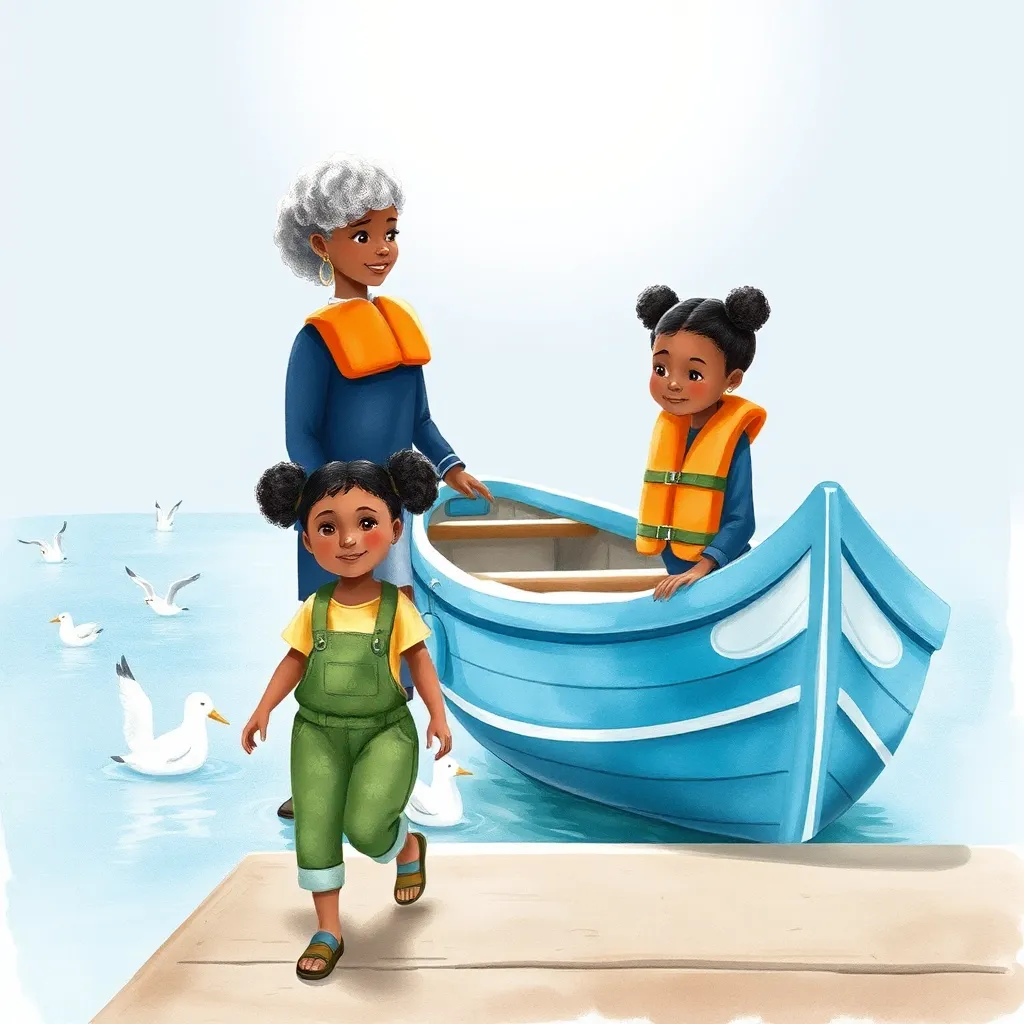
By lunchtime the letters were dry. Aunt Kes slid the boat down into the calm, shining water, buckled on her life jacket and climbed aboard. "Coming?" she called. Ama was still at the top of the slipway, pressing the lid back on the paint tin. She wiped her hands on her dungarees, grabbed her own life jacket and set off down the slipway after her. "Wait for me!" she called. And of course, the boat waited.
Words to know
- tarpaulin
- A big sheet of strong, waterproof cloth used to cover things and keep the rain off them.
- slipway
- A smooth slope at the edge of the water, used to slide boats in and out of the sea.
- quay
- A stone or wooden platform beside the water where boats tie up. It is said like "key".
- harbourmaster
- The person in charge of a harbour, who keeps track of the boats that come and go.
- Steadfast
- Steady and loyal, and always there when you need them.
- kittiwakes
- Small grey and white seabirds that nest on cliffs and have a call that sounds like their name.
- suspected
- Thought that something was probably true, without being completely sure.
- marrows
- Large, long green vegetables, a bit like giant cucumbers, that grow in gardens.
Quiz
More stories like this
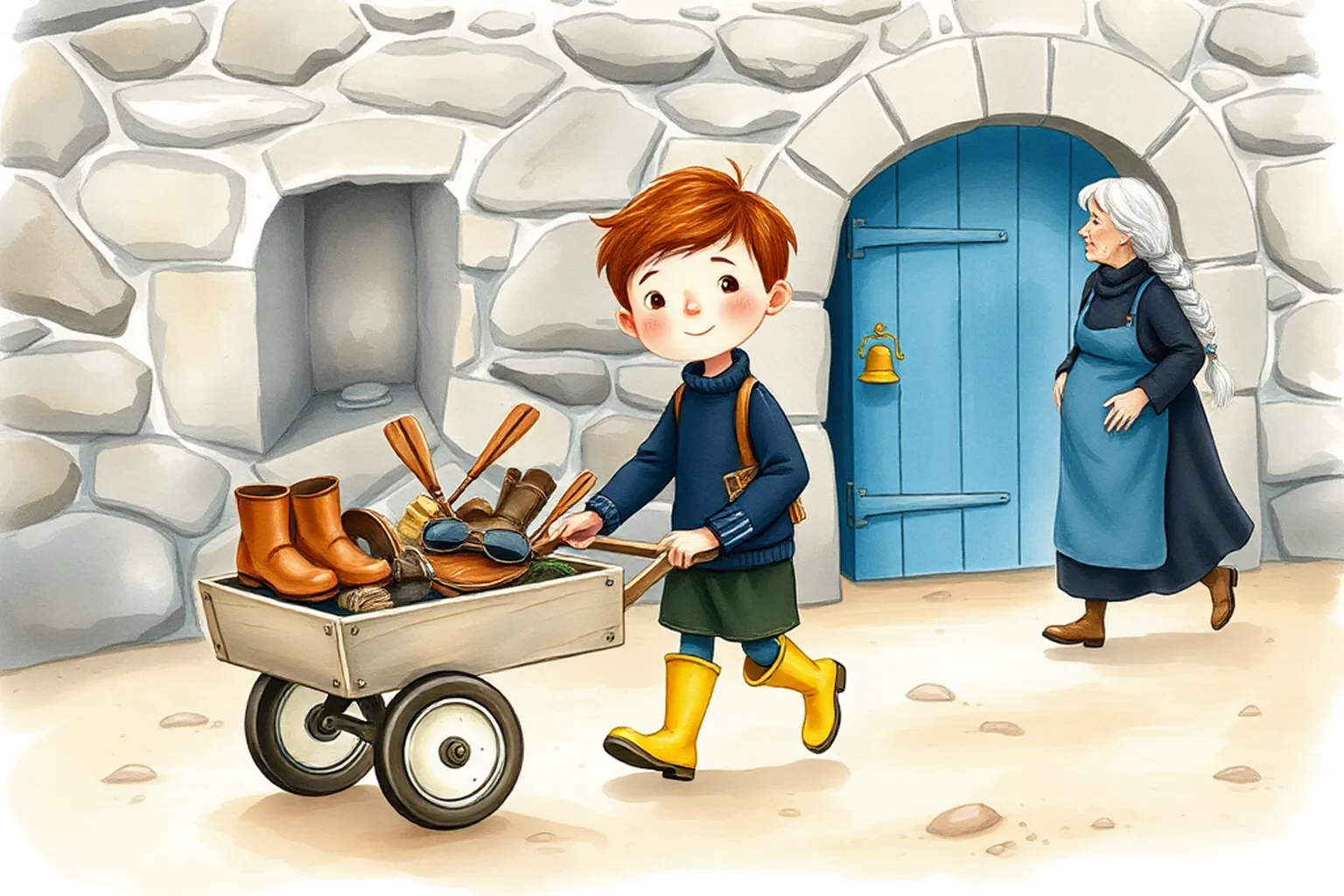
The Office of Things the Sea Returned
Every summer Jago helps his great-aunt in a harbour office where a magic ledger names the owner of whatever the sea washes up. When he finds a small red boot at the back of the shelves, he uncovers a secret, and a rule that only clever thinking can get around.

What Is a Trunk For?
Nandi the young elephant has a new baby brother, and everybody wants to look at him. But the baby keeps tripping over his own trunk, and he has no idea what it is for. Only Nandi has time to show him.

The Village That Winked
Hana's mum works on a space station, and Hana waves whenever it crosses the sky. Then she learns that Mum cannot see her wave, only the village lights, as small as a crumb. So Hana has an idea, and she will need every light switch in the village.
The Tooth Went Plink
Noor has a wobbly tooth that will not come out, and she is worried it might hurt. Then Grandpa tells her a secret about his own teeth, and it makes her laugh so hard that something goes plink.