The Office of Things the Sea Returned
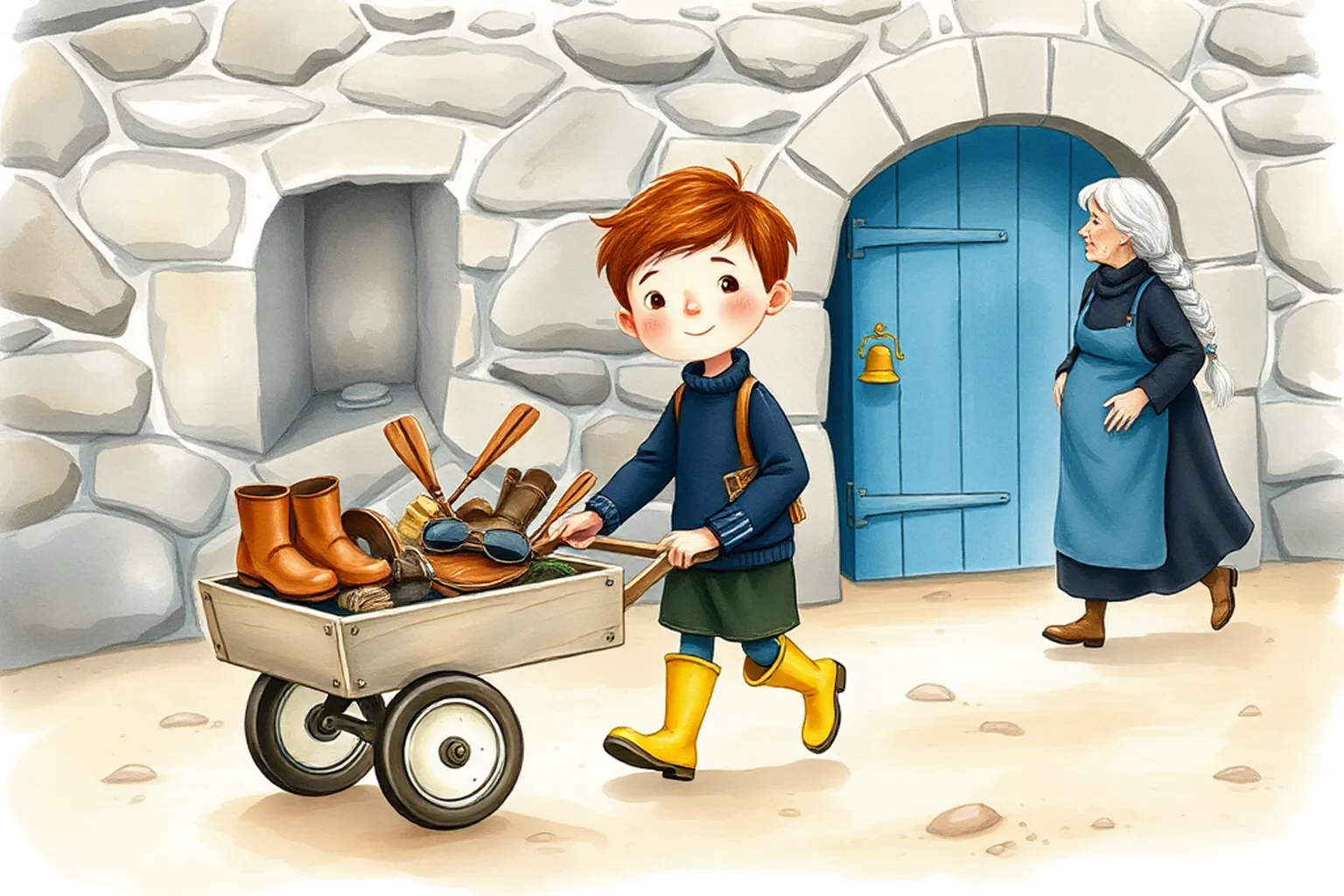
On the harbour at Porthcarrow there is a small blue door with a brass bell beside it and a sign above it. OFFICE OF THINGS THE SEA RETURNED, says the sign. OPEN BETWEEN TIDES. PLEASE WIPE YOUR FEET. Jago's great-aunt Morwenna had kept that office for fifty-one years, and every summer, when he came to stay, she put him to work.
At low tide they walked the sand with a , collecting whatever the sea had brought back. Odd boots, mostly. Oars. Sunglasses by the hundred. An accordion that still wheezed when you lifted it. Everything was dried, labelled and set on the shelves, and the shelves ran back into the hill a good deal further than seemed reasonable.
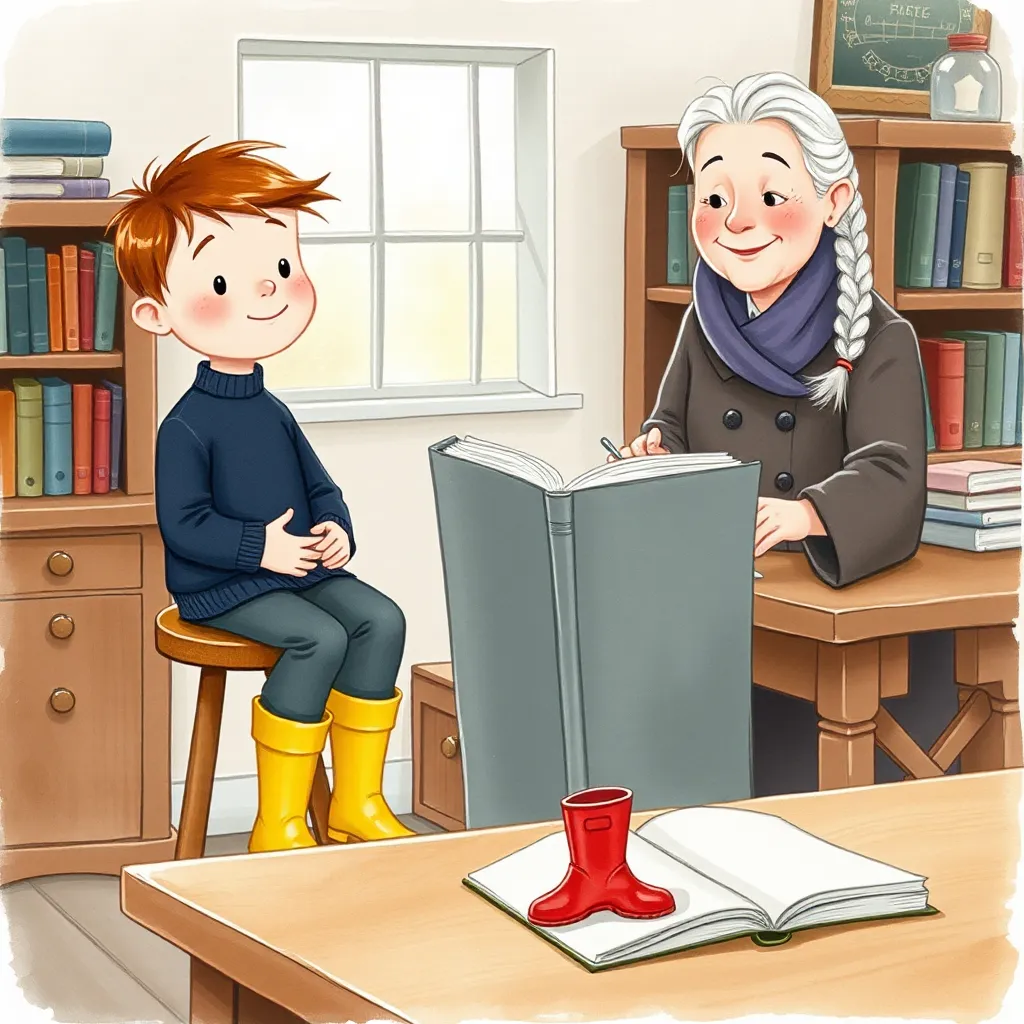
Then came the part you did not mention in town. Each thing was carried to the , a huge grey book that lay open on the front desk. You set the thing on the page and you waited, and after a minute an owner's name rose slowly through the paper, like damp through a wall. Mrs A. Penrose, Fore Street. Or: A fisherman in Norway, who has stopped looking. The ledger was never wrong. Jago's job was to write the postcards. We have your oar.
Three rules were painted over the desk. Nothing is thrown back. Nothing is paid for. A keeper may not from the shelves. Aunt Morwenna rarely explained anything, but she had explained the third. "A keeper who takes so much as a spoon, and the sea notices. The book goes blank, and the tide brings you nothing but weed. That's the bargain, and it's older than I am."
She lived above the office, in two rooms that smelled of toast and tar. On her kitchen windowsill a clump of grew out of a child's red rubber boot: right foot, very old, with a hole in the toe to let the water out. Jago had watered those chives for three summers without once wondering about them. It was just the sort of thing an aunt has.
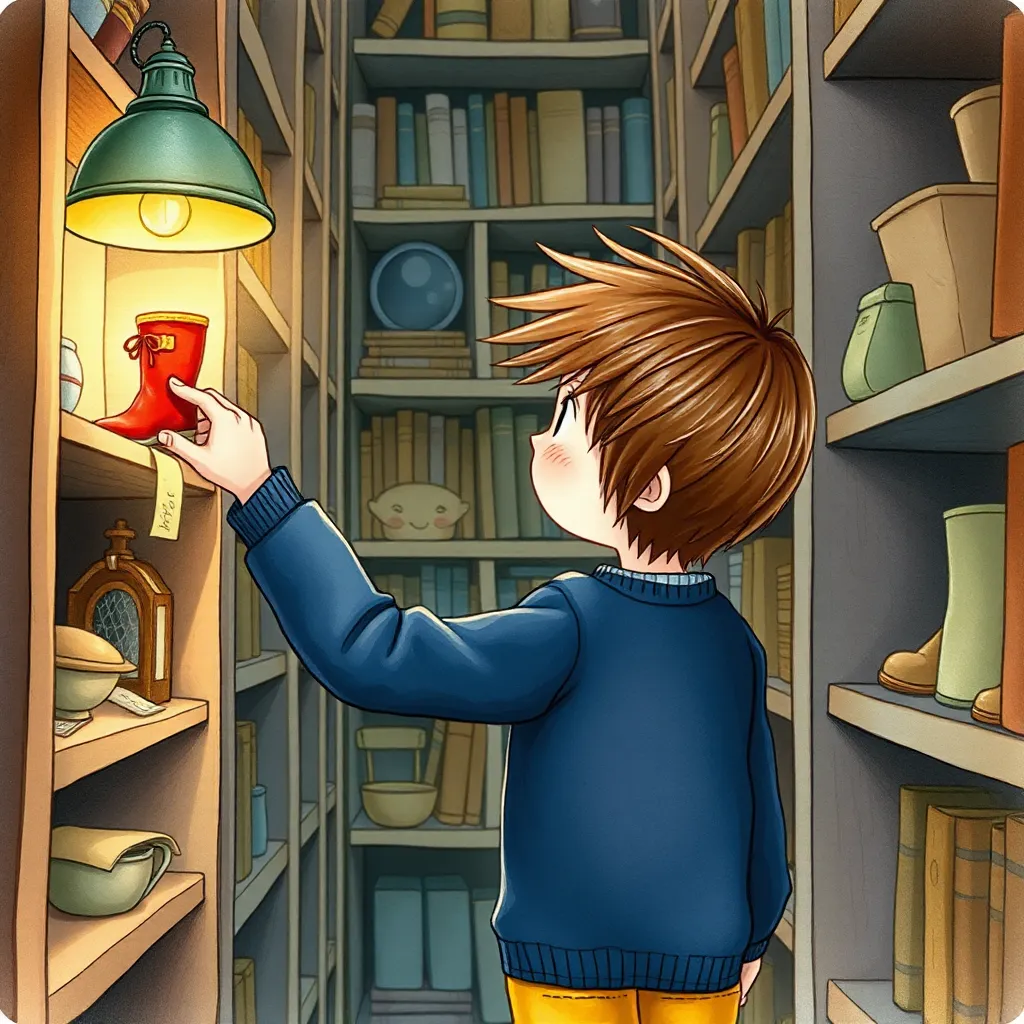
On a wet Tuesday in August she sent him to the back of the shelves with a lamp, further than he had ever been, to look for an anchor. He did not find the anchor. He found, on a shelf by itself, a small red rubber boot. Left foot. There was a bite out of the heel. The label was in Aunt Morwenna's writing, though younger and rounder, and it was dated forty-two years ago. Where the owner's name should have been, it said: See ledger.
That night, after she had gone up to bed, he found the old volume for that year. A slip of brown paper had been over one line. He held the page against the lamp and read the ledger's slow grey writing through it. Morwenna Trevail, aged eight, who lost it off Gull Rock and cried all the way home.
"Why don't you just take it?" he said at breakfast. She put down the teapot, and for a moment he thought she would be angry. "I rang that bell every Saturday for eleven years," she said, "asking after that boot. They got quite tired of me. So when the old keeper gave up, I asked for the job. I thought: I'll be the first to know. And nine years on, there it was on the sand, and me standing over it with a handcart." She buttered her toast with great care. "A keeper may not claim from the shelves. Eat your breakfast."
Jago thought about it for three days. He thought about it while he wrote postcards. He read the rule so many times that the words stopped meaning anything, and then, on the third day, they started meaning something else. It did not say Morwenna Trevail may not claim. It said a keeper.
"Aunt Morwenna," he said, "how does a keeper stop being the keeper?" "She puts the key on the desk and says she . Why?" "Does it say anywhere how long for?" She looked at him for about as long as it takes a kettle to boil. "I don't believe," she said slowly, "that anybody has ever asked."
At the turn of the tide on Thursday she came down in her good coat. She laid the big iron key on the desk in front of him. "I retire," she said, loudly, in the direction of the harbour. Then she walked out and shut the door. Jago climbed on to the stool. The key was heavy and very cold, and the whole office seemed to be holding its breath. Outside, for the first time in fifty-one years, Morwenna Trevail rang the bell. She came in and wiped her feet.
"Good morning," she said. "I have lost a boot." Jago's voice came out higher than he meant it to. "Can you describe it, madam?" "Red. Left foot. Lost off Gull Rock when I was eight. There's a bite out of the heel, which I have always said was a crab." He went to the back and took his time about it, because that was correct. He carried it to the front in both hands and set it on the old ledger, open at its page, and they waited. The slip of brown paper curled up and dropped off by itself. "Sign here, please," said Jago. She signed. Her hand was not quite steady. "We're sorry for the delay," he said, and she laughed, and then for a while she looked out of the window, and he became very busy with a label.
"Now," she said, when she had blown her nose. "I happen to be looking for work." "Have you any experience?" "Some." He gave her the key. Next morning the sand was covered as usual: sunglasses, one oar, and a teapot with a surprised expression. If the sea had noticed, it did not seem to mind. Perhaps it had a sense of humour. It had been returning things for a very long time.
When Jago came down to breakfast there were two red boots on the windowsill, chives in the right and parsley in the left. "That one wants watering," said Aunt Morwenna, without turning round. "And you're late. There's an accordion needs a postcard."
Words to know
- handcart
- A small cart with wheels that you pull or push yourself.
- ledger
- A large book for keeping careful records of things.
- claim
- To say that something belongs to you and ask to have it.
- chives
- A plant with long, thin, green leaves that taste a little like onions.
- gummed
- Stuck down with glue.
- retires
- Stops doing a job for good, usually after working for many years.
Quiz
More stories like this
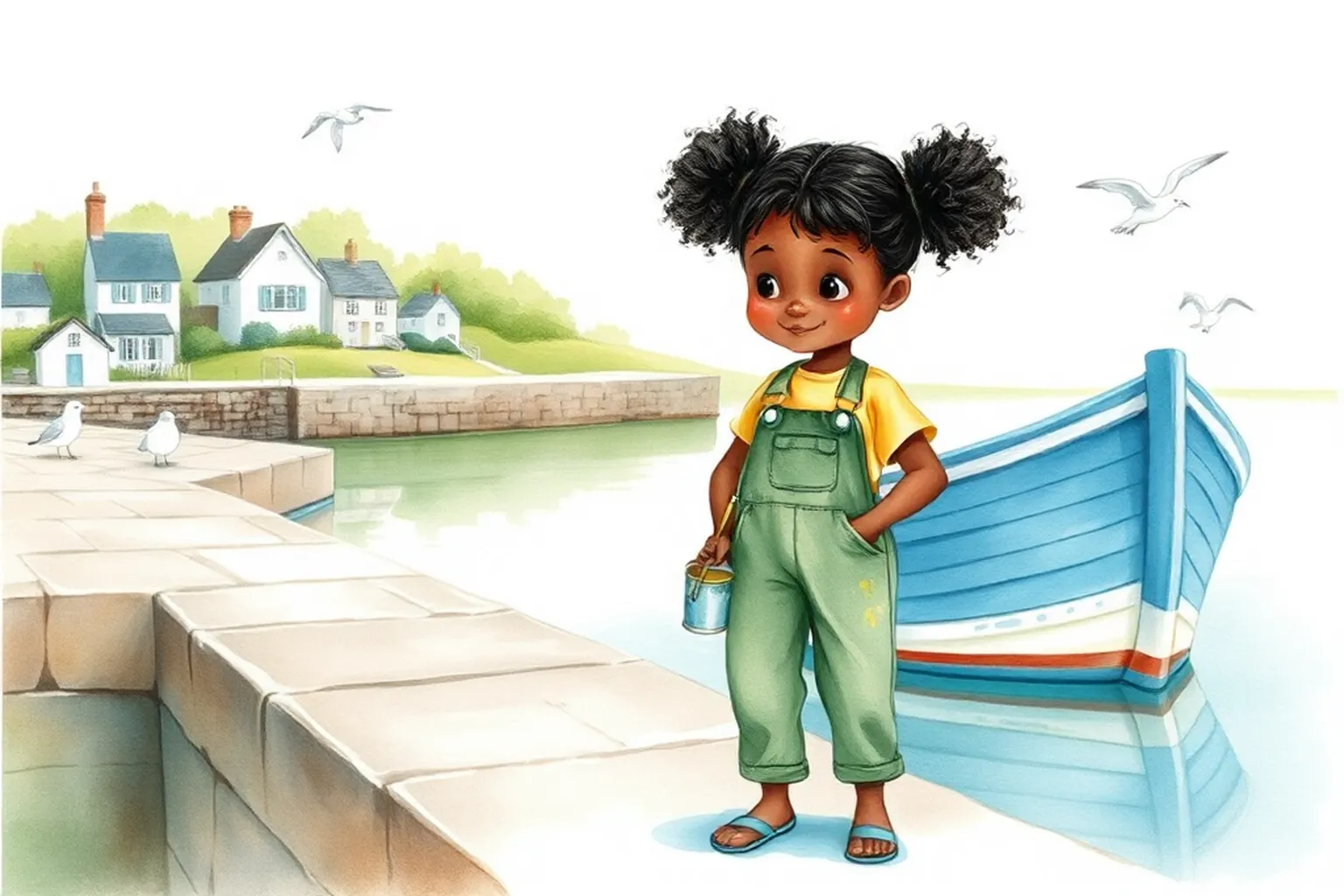
The Boat That Waited for a Name
Ama's aunt has mended an old fishing boat and asked Ama to choose its name and paint it on. But the whole harbour town has an opinion, and every name Ama tries seems to leave someone out.

What Is a Trunk For?
Nandi the young elephant has a new baby brother, and everybody wants to look at him. But the baby keeps tripping over his own trunk, and he has no idea what it is for. Only Nandi has time to show him.
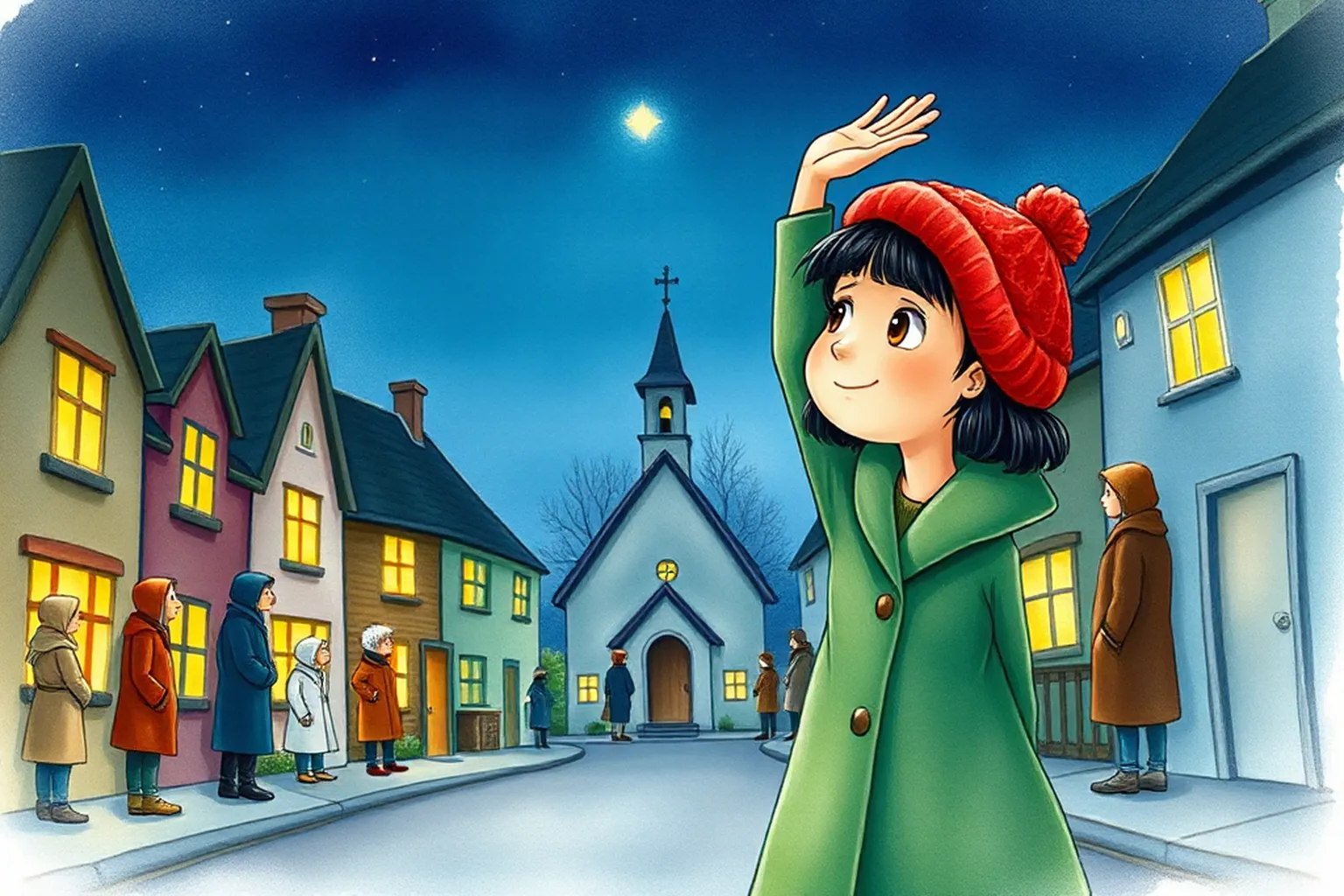
The Village That Winked
Hana's mum works on a space station, and Hana waves whenever it crosses the sky. Then she learns that Mum cannot see her wave, only the village lights, as small as a crumb. So Hana has an idea, and she will need every light switch in the village.
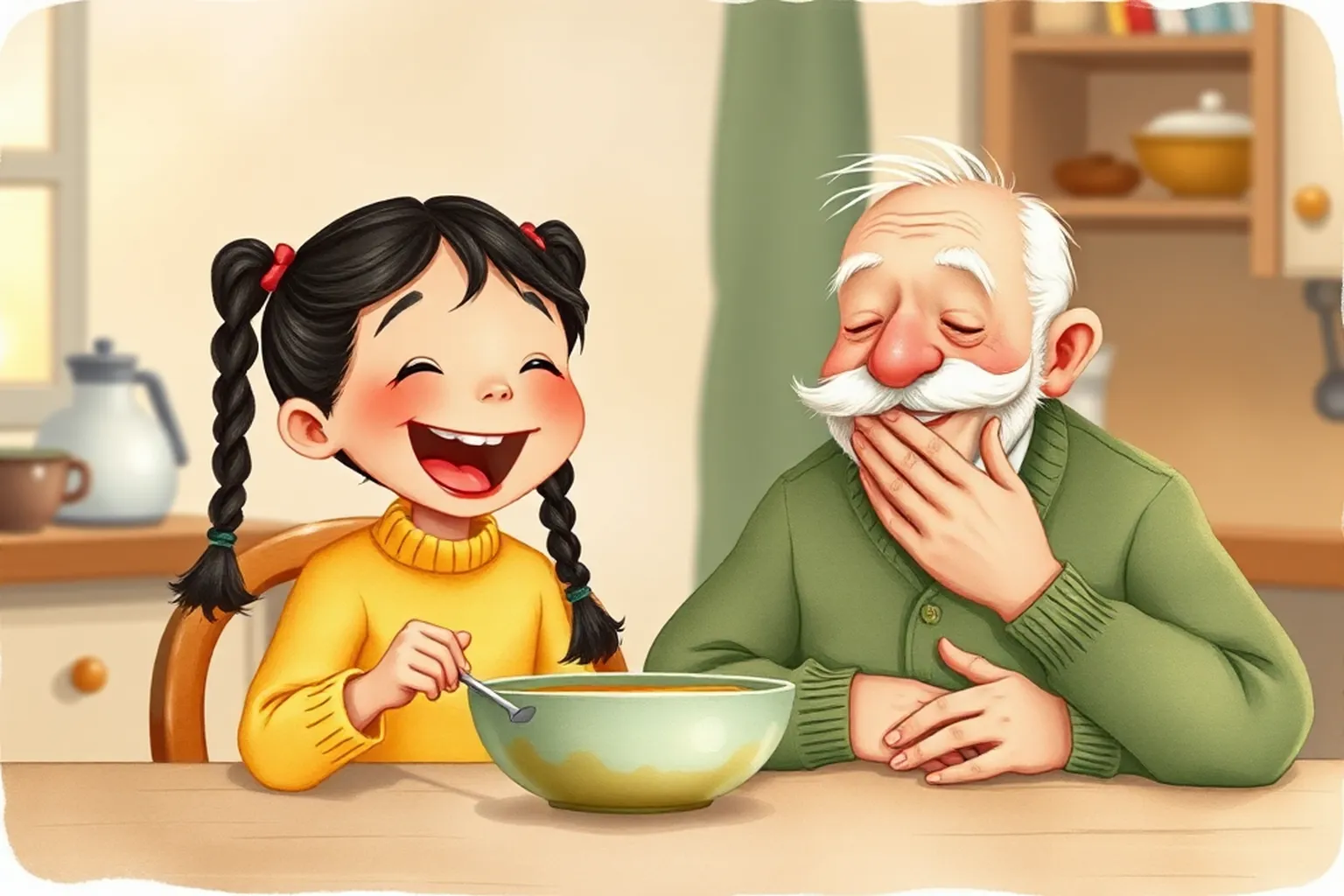
The Tooth Went Plink
Noor has a wobbly tooth that will not come out, and she is worried it might hurt. Then Grandpa tells her a secret about his own teeth, and it makes her laugh so hard that something goes plink.